
Beyond the Screen: 3 Ways to Partner with Parents on AI Ethics and Digital Citizenship
For school leaders, the challenge isn't just about managing devices or filtering content in the building. It’s about extending the lessons of responsibility, ethics, and critical thinking beyond the school walls and into the homes of our families.
EDUCATION
ParentEd AI Staff
11/24/20252 min read
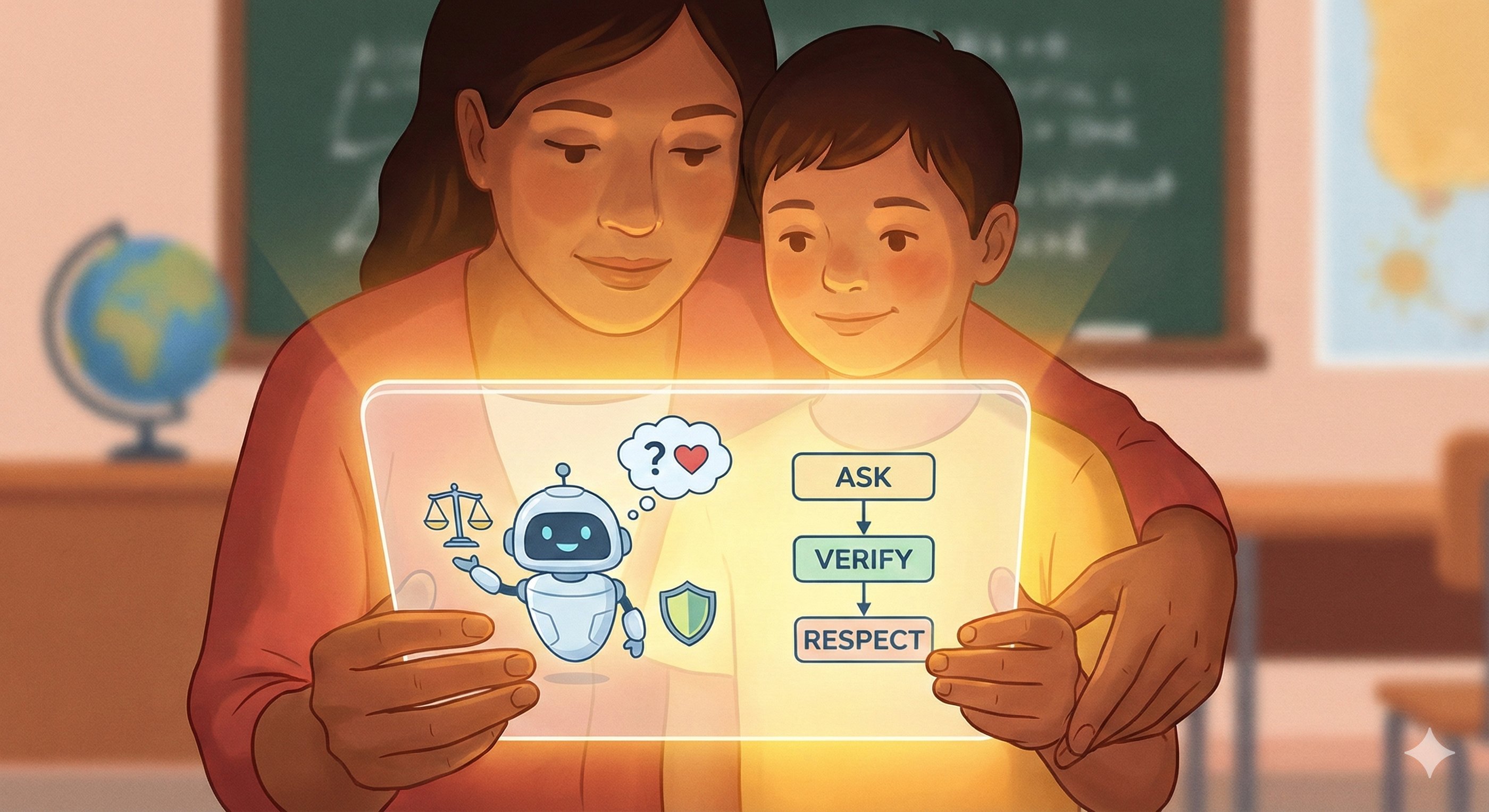
The digital world is no longer a place our students visit; it’s where they live. And with the rapid rise of generative AI, the landscape of that world is shifting faster than ever. For school leaders, the challenge isn't just about managing devices or filtering content in the building. It’s about extending the lessons of responsibility, ethics, and critical thinking beyond the school walls and into the homes of our families.
We can't do this alone. To truly empower our students to be thoughtful, ethical digital citizens, we must move from a model of informing parents to one of partnering with them.
Here are three actionable ways to build that partnership and navigate the new frontier of AI ethics together.
1. Ditch the Lecture, Host an "AI in the Living Room" Workshop
Forget the traditional, one-way presentation on screen time limits. Parents are looking for practical guidance, not another lecture. Host an interactive workshop where parents can get their hands on the same AI tools their children are hearing about.
The Strategy: Set up stations with tablets or laptops where parents can try out a family-friendly AI chatbot or image generator. Have teachers facilitate small-group discussions.
The Goal: Demystify the technology. Shift the conversation from fear ("Will this help my kid cheat?") to function ("How can we use this as a family to plan a vacation or brainstorm dinner ideas?"). Frame AI not as a replacement for human thought, but as a tool that requires human guidance and ethical consideration.
2. Create a "Dinner Table" Digital Digest
Communication is key, but long newsletters often go unread. Instead, provide parents with bite-sized, easy-to-digest resources designed to spark conversation at home.
The Strategy: Send out a weekly or bi-weekly mini-newsletter – a "Digital Digest" – that focuses on a single topic.
The Content: Each edition should include:
A Quick Fact: E.g., "Did you know AI image generators can have biases based on the data they were trained on?"
A Conversation Starter: E.g., "Ask your child: If an AI writes a story for you, who is the author – you or the computer? Why?"
A Family Activity: E.g., "This week, try co-writing a silly poem with ChatGPT and then talk about what it got right and what it got wrong."
3. Co-Author Your School's "Community Code" of Conduct
Don't just hand down a digital citizenship policy from on high. Involve parents and students in the creation of your school's agreements.
The Strategy: Form a committee of teachers, parents, and student leaders to draft a "Community Code" for digital life. Host town halls or use online surveys to gather broader input on key issues like AI use in homework, online privacy, and respectful communication.
The Impact: When families have a voice in creating the rules, they are far more likely to understand, respect, and reinforce them at home. This process transforms a document of "don'ts" into a shared vision of "do's," fostering a sense of collective responsibility for the digital well-being of the entire school community.
By moving beyond the screen and building a true partnership with parents, we can ensure our students have the consistent guidance and support they need to navigate the complex, exciting, and ever-changing digital world with integrity and confidence.