
Facing the New Reality of AI Disclosures and Parental Opt-Outs
For many families, initial curiosity about how generative AI works has evolved into practical questions about classroom implementation, data security, and parental rights—specifically regarding which tools are in use, how student data is managed, and what options exist for families wishing to opt out of AI-driven instruction.
EDUCATION
ParentEd AI Academy Staff
6/12/20264 min read
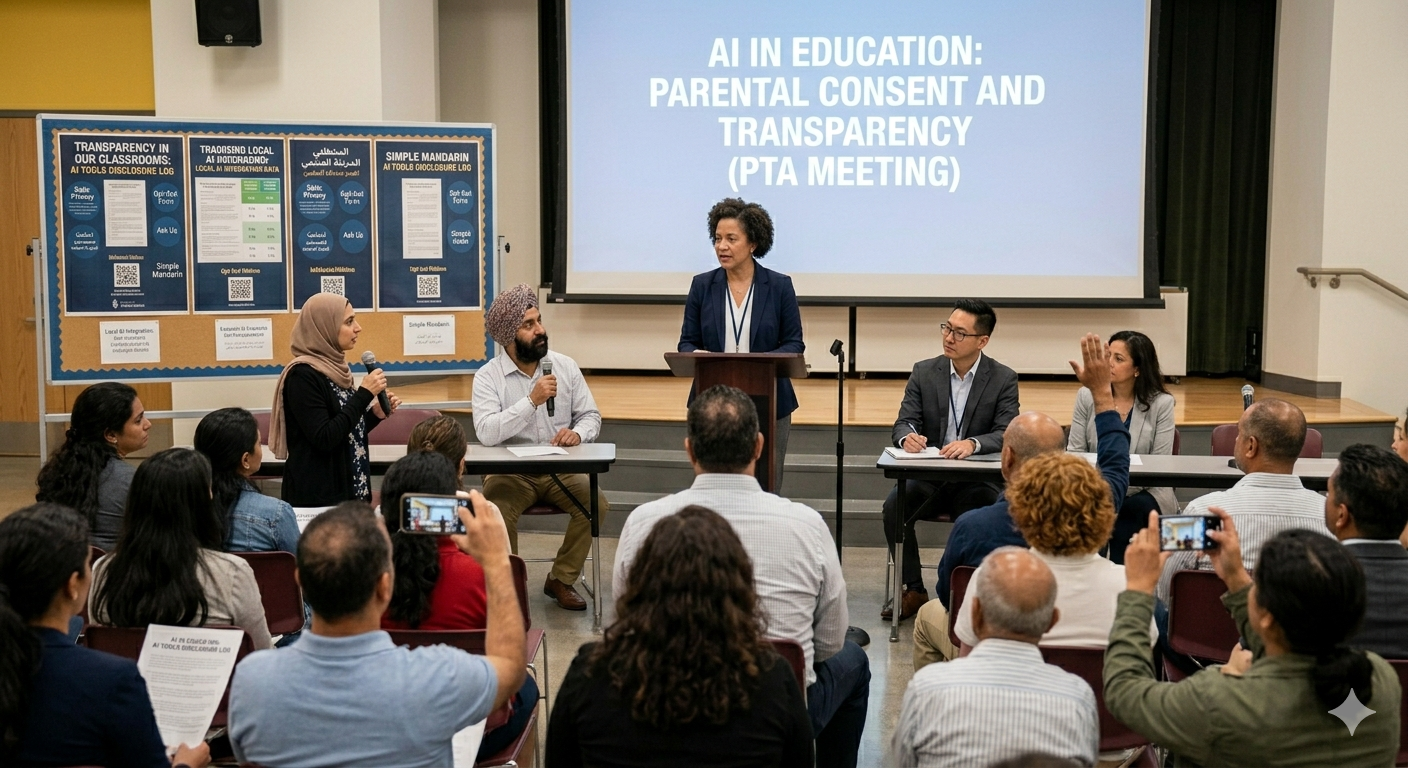
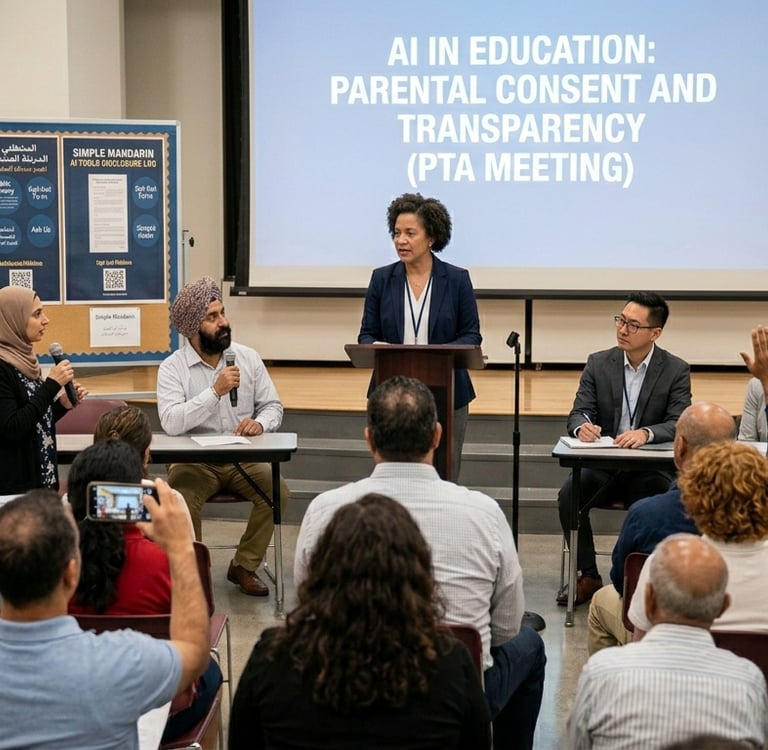
The rapid integration of artificial intelligence into classrooms has shifted the conversation between school communities and building administrators. While district offices manage long-term technology procurement, principals and campus leaders are seeing the daily impact of AI math tutors, writing coaches, and adaptive learning platforms firsthand.
This widespread adoption brings a new focus on operational transparency. For many families, initial curiosity about how generative AI works has evolved into practical questions about classroom implementation, data security, and parental rights—specifically regarding which tools are in use, how student data is managed, and what options exist for families wishing to opt out of AI-driven instruction.
Navigating this friction requires building-level leadership that balances innovation with absolute transparency.
Why Parents Are Anxious
For decades, student privacy was governed by federal laws like FERPA and COPPA, which protected static records like report cards or home addresses. Generative AI changes everything. When a student interacts with an AI writing assistant or chatbot, the tool ingests their unique thought processes, phrasing, and voice.
Because traditional privacy laws have massive loopholes for third-party vendors, parents are feeling unprotected. This has fueled a powerful grassroots push for a Non-Penalty AI Opt-Out.
Families are increasingly demanding the right to say no to AI-driven platforms, automated proctoring software, or algorithmic grading helpers. Crucially, they expect that choosing a traditional, human-centric learning path will not result in grading penalties, social isolation, or academic bias for their child. When a parent requests an opt-out, they look to the principal—not the superintendent—for an immediate solution.
Recommended Actions for Building Leaders
You don’t have to wait for top-down district mandates to build trust and protect your students. Here are four practical, proactive steps school building leaders can take right now to manage AI disclosure and opt-outs on the ground:
Inventory and Publish Your Building’s "AI Footprint"
Do you know every AI tool currently being used by your faculty? Take a quick digital inventory during your next staff meeting. Work with your instructional coaches to create a simple, clear document or webpage for your school site listing the approved AI tools active in your building. When parents can see exactly what is being used and why, mystery—and anxiety—disappears.
Enforce "Human-in-the-Loop" Grading in Your Classrooms
One of the fastest ways to lose parental trust is to let software calculate or justify a student's grade. As an instructional leader, establish an unshakeable standard for your staff: AI can be a time-saving assistant for generating rubrics or brainstorming feedback, but a human educator must review, validate, and take absolute ownership of every final mark. Parents need to know that a human teacher is always the final judge of their child's hard work.
Scaffold Parallel, "Low-Tech" Instructional Paths
When collaborating with teachers during grade-level planning, ensure that assignments using generative AI have an immediate, pre-designed "parallel track." If a class is using an AI chatbot to brainstorm essay outlines, ensure there is a comparable graphic organizer or human-guided alternative ready to go. A student opting out should be able to pivot seamlessly without drawing negative attention or losing academic rigor.
Host "Coffee with the Principal" AI Listening Sessions
Instead of waiting for an angry email or a tense parent-teacher conference, get ahead of the narrative. Host an informal morning or evening session to show parents the exact AI tools your school uses. Let them see the guardrails you have in place, explain how teachers use the tech responsibly, and listen to their concerns. Active listening builds immense community capital.
Grounding Innovation in Trust
The tension surrounding AI in our hallways isn't born out of a desire to hold students back from the future. It comes from a deeply rooted, shared priority between parents and educators: ensuring that children are safe, respected, and treated as individuals rather than data points.
By leading with transparency, validating parental rights, and ensuring that the human element remains at the absolute core of your school’s culture, you can build a community where technology serves the classroom—never the other way around.
Resources:
Here are the direct links to the primary sources and legislative trackers mapping out these K-12 AI opt-out movements, transparency logs, and parental notification trends:
🏛️ State Legislative and Policy Trackers
FutureEd 2026 State AI in Education Legislative Tracker: A comprehensive analysis tracking over 60 bills across the country shaping how schools integrate AI and the guardrails governing its use. It details strict state proposals—like South Carolina's H.B. 5253—which seek to mandate annual public disclosure of AI tools and establish formal parental opt-in rights.
ExcelinEd State K-12 AI Policy Analysis: A deep dive into how state frameworks are responding to student data privacy, tool safety, and the "vetting burden" currently falling on local school leaders.
MultiState 2026 AI in Education Policy Trends: A policy tracker highlighting state-level boundaries on technology. It explicitly covers bills like Illinois's SB 3735, which aims to give families the legal right to opt out of school tech and automated AI grading decisions.
🛡️ Privacy and Safety Vetting Toolkits
ExcelinEd Model Policy: Guardrails for AI-Powered Educational Tools: A model blueprint built to help school leaders protect student data currency. It details framework criteria like algorithmic impact assessments, mandatory 72-hour safety incident reporting, and "Human-in-the-Loop" controls for educators.
Future of Privacy Forum (FPF) Legal Compliance Guide: An administrative toolkit outlining legal parameters and compliance standards for vetting generative AI platforms before they are introduced to minors or student-facing environments.
📄 Federal Templates
U.S. Department of Education PPRA Model Notices: The official clearinghouse for the Protection of Pupil Rights Amendment (PPRA), providing downloadable model forms and text that schools can use to notify parents and manage opt-out choices for specific student activities.