
When Seeing Isn’t Believing: Navigating the Deepfake Threat in Your School
AI has changed the rules of digital evidence. Here is your guide to protecting students, updating policy, and partnering with parents in the age of synthetic media.
EDUCATION
ParentEd AI Academy
12/9/20253 min read
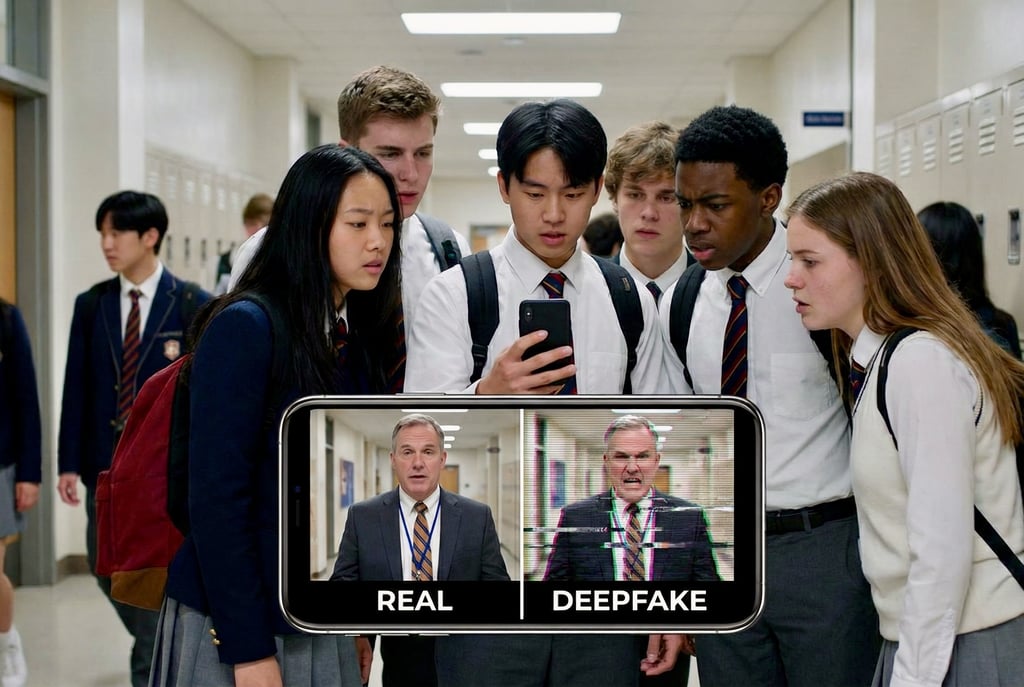
Imagine this nightmare scenario: A video circulates on social media showing a well-behaved student shouting slurs in the hallway, or a beloved teacher behaving inappropriately in class. The footage looks authentic. Outrage builds instantly. Phones start ringing off the hook at the district office.
There’s just one problem: It never happened.
Welcome to the era of deepfakes. As school leaders, we are no longer just managing behavior in physical hallways; we are managing complex digital realities where seeing is no longer believing.
Deepfakes—highly realistic AI-generated videos, audio, or images that swap faces or manipulate voices—have moved from the realm of high-budget Hollywood studios to accessible smartphone apps. While sometimes used for harmless memes, this technology is increasingly being weaponized in ways that directly threaten school climates.
Here is what school leaders need to know to lead proactively, protect their communities, and guide anxious parents through this new frontier.
The Real-World Threat to Schools and Students
The primary danger of deepfakes in an educational setting isn't international espionage; it’s interpersonal harm and institutional disruption.
1. Supercharged Cyberbullying and Harassment
Bullying has always relied on rumors, but deepfakes provide "video evidence" for those rumors. Students can now create humiliating scenarios involving classmates and spread them instantly. The psychological toll on a victim who knows an event is fake, while the rest of the world believes it’s real, is devastating.
2. Non-Consensual Sexual Imagery (NCSI)
This is perhaps the most alarming threat. AI tools can easily take a normal photo of a student (often taken from social media or a yearbook) and generate explicit, nude imagery. This is a severe form of sexual harassment and can lead to sextortion crises that destroy student well-being.
3. Undermining School Authority and Reputation
It is not just students at risk. Deepfakes can target teachers, principals, or superintendents to manufacture scandals, disrupt school operations, or erode trust in leadership. A fake audio clip of a principal announcing a controversial policy can cause chaos before the truth ever catches up.
The School Leader’s Playbook: Policy and Preparation
We cannot wait for a crisis to figure out our stance on synthetic media. We must be proactive.
Update Acceptable Use Policies (AUPs) Immediately: Your current bullying policy might not cut it. Ensure your AUPs and Codes of Conduct explicitly forbid the creation, distribution, or possession of manipulated media intended to harass, deceive, or harm others. The intent to deceive should be a punishable offense regardless of the medium.
Treat Media Literacy as Digital Self-Defense: We teach fire drills because fires happen. We must teach media literacy because deepfakes happen. Curriculum must go beyond "citing sources." It needs to train students to pause, evaluate emotional manipulation in media, and verify content laterally across multiple reliable sources.
Establish a Clear Incident Response Protocol: If a student reports a deepfake, what is step one? Do your counselors know how to handle the trauma of digital impersonation? Do your SROs or local law enforcement understand the legal implications? Have a flowchart ready: Secure the evidence, support the victim, involve legal counsel, and communicate transparently.
Guiding Parents: How to Spot the Unspottable
Parents are terrified of this technology, and they are looking to schools for guidance. When talking to parents, your goal is empowerment, not panic.
Here is what we need to tell parents about helping their kids navigate this landscape:
1. The "Pause" is the Most Powerful Tool
Teach parents to instill a "strategic pause" in their children. Deepfakes are designed to trigger strong emotions—anger, shock, fear. If a video makes them feel an intense emotion immediately, that is a red flag. Teach kids: Don't share. Don't comment. Pause and verify.
2. Move Beyond "Spot the Glitch"
Previously, we advised looking for unnatural blinking, blurry earlobes, or robotic voices. This advice is becoming obsolete. AI is advancing too fast. Relying on technical flaws is a losing battle.
Instead, focus on context:
Is this behavior totally out of character for the person?
Where did this video come from? A random, anonymous account?
Are reputable news sources reporting this event?
3. Open Lines of Communication are Vital
The worst outcome is a child dealing with a deepfake situation alone because they fear getting in trouble. Parents need to assure their kids that if they encounter this—whether they are a victim or saw it happen—they can come forward without judgment.
How to Talk to Your Parent Community
Don't bury this topic. Address it head-on through newsletters, PTA meetings, or dedicated parent education nights.
Key Messages for Parent Communication:
Acknowledge the Reality: "We know AI and deepfakes are scary topics. We are taking them seriously."
Define the School's Stance: Clearly communicate the changes to your policies regarding synthetic media.
Provide Actionable Resources: Don't just list problems; offer the media literacy tips mentioned above.
Reassure Them: Remind parents that while the technology is new, the core values of empathy, critical thinking, and community support remain our best defense.
The age of AI requires educational leaders to be digitally savvy guardians of their school culture. By updating our policies and partnering closely with parents, we can ensure that truth prevails over algorithms.