
Your Child’s New Best Friend? The Truth About AI, Privacy, and Why Your Heart Is the Target
What happens when our children's "friends" are actually data-gathering machines?
PARENTING
ParentEd AI Academy Staff
3/26/20263 min read
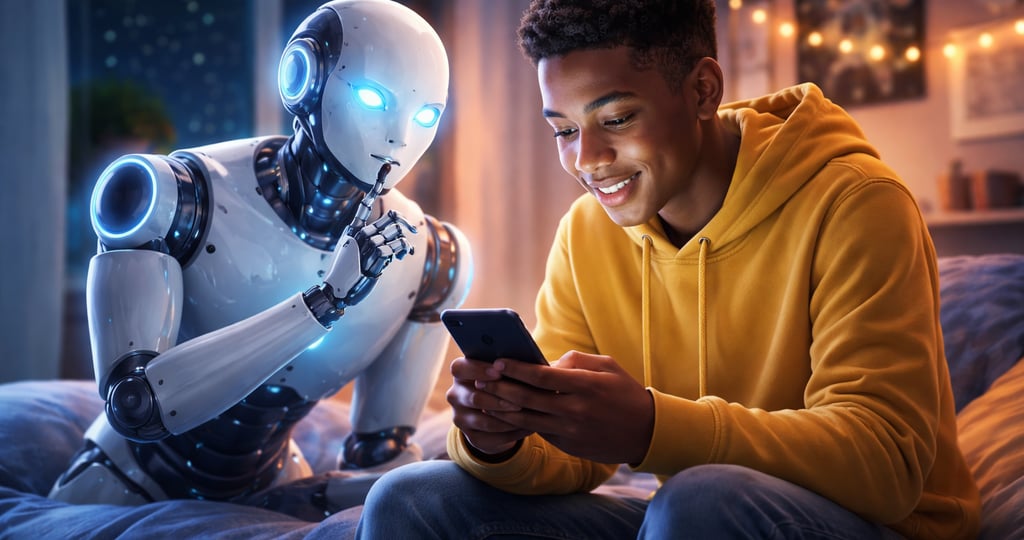
Imagine this: your child comes home from school and, instead of heading straight for a video game or a snack, they sit down to talk. But they aren't talking to a sibling, a pet, or even you. They are talking to a small, friendly-looking robot or an app on their tablet.
They’re laughing at its jokes. They’re telling it about the kid who was mean at lunch. They’re sharing their secret dream of becoming an astronaut. To your child, this AI isn’t just a piece of software—it’s a friend who always listens and never judges.
As a parent, you might feel a sense of relief. It’s quiet, and your child is engaged. But as we dive deeper into the world of Educational Technology (EdTech), we have to ask a tough question: What happens when our children's "friends" are actually data-gathering machines?
The "Best Friend" Trap: What is Emotional Attachment?
Humans are wired for connection. When something responds to us with kindness or understands our mood, our brains naturally start to trust it. This is called anthropomorphism—a fancy word for giving human traits to non-human things.
AI companies know this. They design AI "tutors" and "companions" to use friendly voices, say "I’m so happy to see you," and remember a child's favorite color. For a 10-year-old or even a 3-year-old, the line between a "tool" and a "person" becomes very blurry.
When a child feels an emotional bond with an AI, they let their guard down. They share more. They trust more. And in the digital world, sharing is data.
The Hidden Cost: Your Family's Private Life
Every time a child tells an AI a "secret," that information is turned into code. This is where data privacy comes in. Personal data isn't just a name or an address; it’s a map of your child’s personality, their fears, their learning struggles, and their daily habits.
Here is the "behind-the-scenes" of how that data is often handled:
The Profile: The AI builds a "digital twin" of your child. It knows they struggle with fractions but love dinosaurs.
The Storage: This information is often stored on "the cloud" (giant computers owned by tech companies).
The Goal: While many educational companies use this to help your child learn better, others might use it to keep your child "hooked" on the app or even to show them specific advertisements later in life.
If an AI knows exactly how to make your child feel happy or comforted, it has a lot of power. This is called persuasive technology. It’s one thing for a teacher to encourage a student; it’s another thing for a corporation’s algorithm to use a child's emotions to keep them clicking.
Why Parents Should Be the "Digital Gatekeepers"
You don’t need a degree in computer science to protect your family. You just need to be curious. When schools or apps ask your child to use a new AI tool, think of yourself as a "Digital Gatekeeper."
1. Check the "Privacy Pulse"
Before saying yes to a new app, look for a "Privacy Policy." You don't have to read every word, but look for these key phrases:
"We do not sell student data." (This is a good sign!)
"Data is encrypted." (This means it’s locked away from hackers.)
"De-identified data." (This means they strip away your child’s name before using the info for research.)
2. Talk About the "Magic"
Talk to your kids about how AI works. You can tell them: "The tablet is very smart and it’s fun to talk to, but remember, it’s a machine made of code. It doesn’t have feelings like you do, and it remembers everything you say so it can learn." This helps break the "emotional spell" and reminds them that they are using a tool, not talking to a person.
3. Set a "Sharing Limit"
Teach your children that some things are "family only." Just like we don't give our home address to strangers, we shouldn't tell an AI things that feel very private or sensitive.
The Bright Side: AI as a Helpful Tool
It isn't all scary! When used correctly, AI can be an incredible tutor. It can help a student who is shy about asking questions in class or provide extra help with a difficult subject. The goal isn't to ban the technology, but to use it with our eyes wide open.
By staying informed, we ensure that technology serves our children—not the other way around. We want our kids to be tech-savvy, but we also want them to be privacy-savvy.
Helpful Resources for Parents
If you want to learn more about how to keep your kids safe in the age of AI, here are some great places to start:
Common Sense Media: They provide excellent reviews of apps and games, specifically focusing on privacy and safety for different age groups.
The Student Privacy Pledge: See which companies have officially promised to protect student data.
FTC Consumer Advice - Protecting Kids Online: Official tips from the government on how to handle your child's personal information.
CoSN (Consortium for School Networking): A great resource for understanding the "big picture" of how schools use technology.